Why African Bettors Outsmart Bookmakers: Cultural Betting Patterns the Global Industry Overlooks
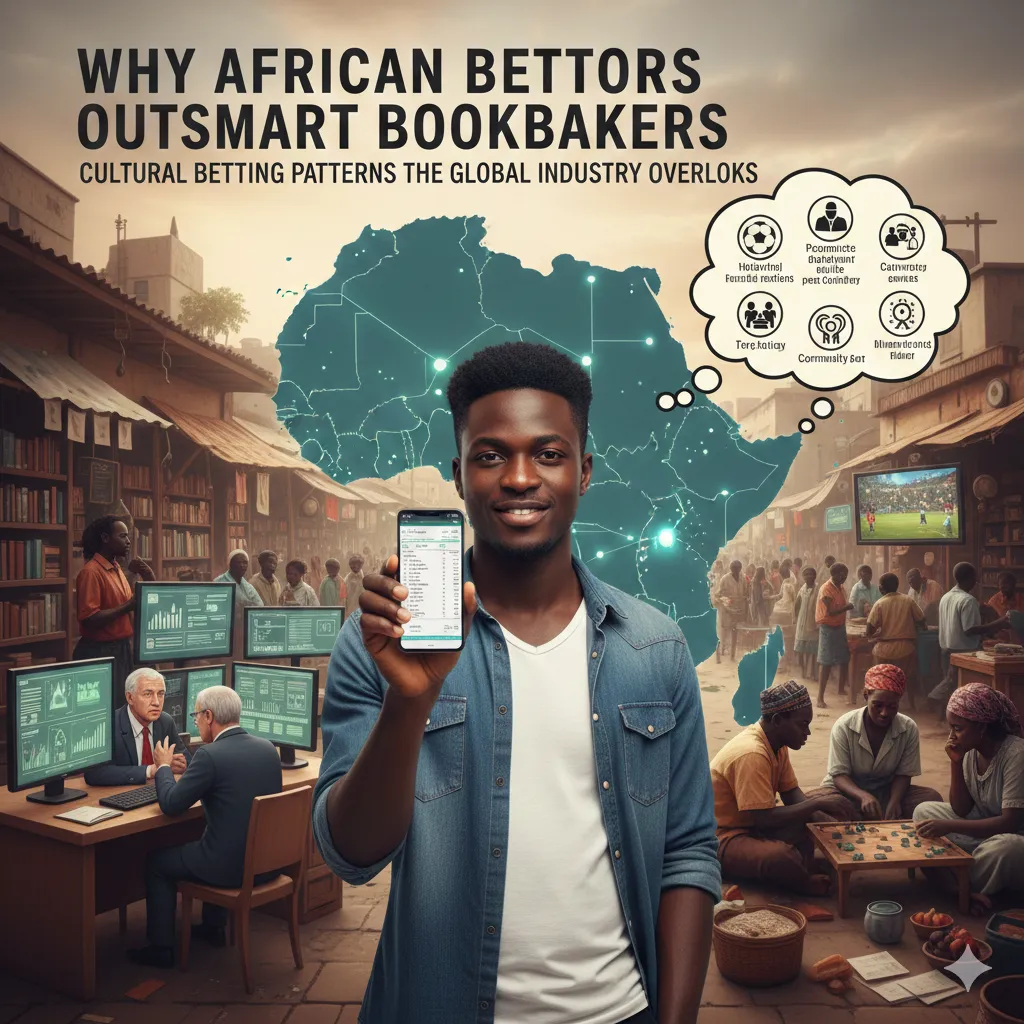
Sports betting across Africa has grown into a powerful cultural and economic force. What many international bookmakers still fail to recognize is that African bettors often think and act in ways their models don’t fully understand. Instead of relying only on cold statistics, many punters across the continent combine community knowledge, local context, lived experience, and modern digital tools — and that combination sometimes lets them outperform the very systems designed to predict their behavior.
African bettors are not just chasing luck. For a huge number of people, betting is a shared intellectual game: analyzing matches, debating tactics, and reading subtle signals that never appear in spreadsheets. This is where global bookmakers underestimate them.
Community Intelligence: The Hidden Predictive Engine
In many African countries, sports conversation is everywhere. Match analysis is not limited to TV studios or paid tipster channels; it happens in:
- Barbershops and street cafés
- Neighborhood betting shops
- WhatsApp and Telegram groups
- University dorms and office chats
Information spreads fast. A rumor about a star striker picking up a knock in training, a coach falling out with management, or a team arriving late after a brutal road trip can circulate through local networks long before it appears in any official report.
For bookmakers, these factors are often invisible. Their models are fed by structured data: goals, xG, possession, past results. For local bettors, however, “soft data” is just as important:
- Who looked tired in the last match, even if they technically completed the game.
- Which coach is under pressure from fans or owners.
- How a team historically reacts to travel, altitude, or hostile crowds.
This community intelligence works like a decentralized scouting and analytics system. It may not look scientific on the surface, but over time it produces surprisingly sharp predictions.
Local Nuance That Algorithms Can’t Capture
Global sportsbooks are usually built around European patterns of play: predictable schedules, good infrastructure, stable finances, and detailed statistics. African domestic football often operates in a very different reality.
Travel conditions alone can flip the script. Many teams still travel long distances by bus, sometimes overnight, sometimes on poor roads. Fatigue is not a theoretical factor — it’s brutally real. Add climate into the mix: extreme heat, heavy rain, or uneven pitches can radically change a team’s style, tempo, and stamina.
Experienced African bettors intuitively know which teams:
- Struggle when they leave their home region
- Are physically robust enough to cope with long trips
- Habitually underperform in certain cities or climates
These details rarely show up in the bookmaker’s mainline model, especially if their trading team is based in Europe. But for local punters, they are part of everyday football knowledge and can expose badly priced odds.
Cultural Betting Psychology That Breaks the Mold
Most bookmaker models rely on assumptions borrowed from Western behavioral economics: bettors are more or less rational, follow certain risk patterns, and respond predictably to price changes. African betting culture doesn’t always fit those assumptions.
Emotions and identity play a visible role. National teams, regional rivalries, and historic narratives all shape how people see a match. But this doesn’t mean African bettors are irrational — it means they include non-numeric data in their decision-making.
For example:
- A national team known for resilience might be underrated in tournaments where motivation and pride matter more than league form.
- Clubs famous for late comebacks or mental fragility are evaluated not only on their stats, but on long memories of “how they are in big games.”
Instead of separating emotion and logic, many African bettors merge them. They read the mood of a team, a stadium, or an entire nation — something an algorithm struggles to quantify.
Digital Tools Amplifying Local Insight
The rise of mobile money and cheap smartphones has not just made betting more accessible; it has made bettors smarter. Punters can now compare odds, follow live stats, and join large strategy communities in real time.
A typical experienced bettor today might:
- Use statistics websites to check form, goals, injuries, and fixtures.
- Follow local journalists and insiders on social media for faster updates.
- Cross-check what friends and groups are saying to see if the narrative matches the data.
- Decide whether the bookmaker’s odds fairly reflect everything they know.
On top of that, there are specialized resources that help structure betting knowledge into more professional strategies. For example, the in-depth sports betting guides at Newsquare Gallery break down how to approach different markets, bonuses, and bookmakers in a more systematic way, making it easier for African bettors to turn raw intuition into disciplined strategy.
Here, technology doesn’t replace local wisdom — it organizes and enhances it.
Why Bookmakers Misread African Bettors
From a distance, African markets can look wild: sudden odds movements, surprising bet volumes on specific teams, or unexpected love for certain underdogs. Bookmakers sometimes label this “unpredictable behavior.”
But what looks chaotic is often tightly organized:
- When a WhatsApp group of 200 serious bettors agrees an away team is exhausted, that’s not noise; it’s a shared model.
- When several cities react to a piece of insider news at once, it’s not random; it’s a network.
The problem is not that African bettors are unpredictable, but that bookmakers are not listening to the right signals. Their tools are tuned to a different ecosystem.
What Bookmakers Could Learn
If global betting operators genuinely studied African betting cultures, they would find several lessons that could improve their models everywhere.
They would see the value of:
- Integrating local travel, climate, and infrastructure into performance models
- Monitoring community sentiment as a serious data stream, not just a curiosity
- Understanding how pride, rivalry, and narrative affect both performance and betting patterns
They’d also realize that a “hybrid” approach to analysis — mixing data, emotion, and context — might actually be superior in many cases to a purely numeric one. African bettors have been doing hybrid analysis for years, often without calling it that.
Why African Bettors Will Keep Surprising the Industry
Sports betting in Africa is not a copy of European betting transplanted onto another continent. It is its own system: fast, social, emotional, analytical, and increasingly digital. Bettors rely on each other as much as they rely on stats, and they see things algorithms don’t see.
As long as bookmakers continue to base their decisions on incomplete views of these markets, African punters will keep finding value — in mispriced underdogs, overlooked fatigue factors, misread sentiment shifts, and small cracks in the odds.
They’re not just “players” in a game designed elsewhere. In many ways, they are co-designers of a new, more complex betting reality — one where community, culture, and context matter just as much as numbers on a screen.